
Anxiety and Cognitive Behavioural Hypnotherapy: How CBH Can Help You Feel Calmer and More in Control
Learn how Cognitive Behavioural Hypnotherapy, also known as CBH, can help with anxiety by combining CBT tools, relaxation, hypnosis, self-hypnosis and practical coping skills.
Emilis Lasukas
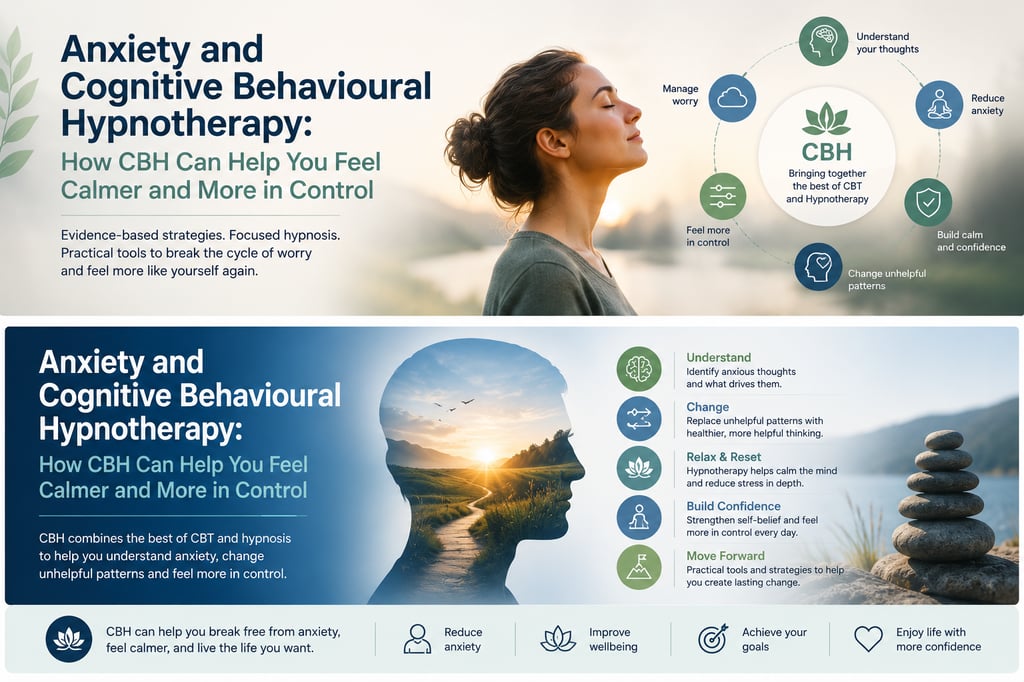
Anxiety and Cognitive Behavioural Hypnotherapy: How CBH Can Help You Feel Calmer and More in Control
Anxiety can feel exhausting. It may show up as racing thoughts, tension in the body, overthinking, avoidance, panic sensations, difficulty sleeping, or a constant feeling that something bad might happen.
For some people, anxiety is linked to specific situations, such as public speaking, social situations, driving, health worries, work pressure or making decisions. For others, it feels more general, like the mind and body are always on alert.
Cognitive Behavioural Hypnotherapy, often called CBH, is a practical approach that combines ideas from Cognitive Behavioural Therapy, hypnosis, relaxation training, imagery and self-hypnosis. The aim is not to “magic away” anxiety, but to help you understand it, respond to it differently, and gradually build a calmer, more confident way of coping.
What Is Anxiety?
Anxiety is a natural human response. It is part of the body’s threat system, designed to help us notice danger and prepare to act. When anxiety is working well, it can protect us and help us stay alert.
The problem starts when the threat system becomes too sensitive. The body may react as if something is dangerous even when you are not truly unsafe.
This can create symptoms such as:
tight chest or shallow breathing
racing heart
tense muscles
nausea or stomach discomfort
dizziness or feeling unreal
worrying thoughts
fear of losing control
avoiding situations that trigger anxiety
Anxiety often becomes stronger when we start fearing the anxiety itself. For example, a person might think, “What if I panic?” or “What if people notice?” This can make the body even more tense, which then seems to confirm that something is wrong.
CBH helps by working with both the mind and the body.
What Is Cognitive Behavioural Hypnotherapy?
Cognitive Behavioural Hypnotherapy is a therapy approach that blends cognitive behavioural methods with hypnosis and guided imagery.
In simple terms, CBH looks at how your thoughts, emotions, body sensations and behaviours influence each other.
For example:
A situation triggers anxiety.
You have a thought such as, “I won’t cope.”
Your body reacts with tension, fast breathing or panic sensations.
You avoid the situation.
The avoidance gives short-term relief, but the anxiety becomes stronger over time.
CBH helps you interrupt this cycle.
Instead of only talking about anxiety, CBH often includes practical exercises. These may include breathing, tension release, mindfulness, self-hypnosis, coping statements, imagery rehearsal, exposure exercises and ways of challenging unhelpful thinking.
How CBH Can Help With Anxiety
CBH may help with anxiety by teaching you how to calm the body, question anxious thoughts and gradually face situations with more confidence.
Rather than trying to force anxiety to disappear, the focus is often on changing your relationship with it.
You can learn to notice anxious sensations without immediately reacting to them. You can practise new coping responses while relaxed. You can rehearse difficult situations in your imagination before taking real-life steps.
This can help you feel more prepared and less controlled by fear.
Why Hypnosis Can Be Useful for Anxiety
Hypnosis in CBH is not about losing control. It is usually a focused, relaxed state where you can pay attention to helpful suggestions, imagery and mental rehearsal.
Many people already experience natural “trance-like” states in everyday life, such as being absorbed in a film, driving on autopilot, or becoming deeply focused on a thought. Hypnosis uses this natural ability in a structured and therapeutic way.
For anxiety, hypnosis may be used to:
practise relaxation
imagine coping calmly with a feared situation
strengthen confidence
rehearse helpful thoughts
reduce tension in the body
develop self-hypnosis skills for daily practice
The goal is not for the therapist to control you. The goal is to help you develop more control over your own responses.
The Role of Thoughts in Anxiety
Anxiety is often maintained by unhelpful thinking patterns. These thoughts may feel automatic and convincing, especially when the body is already anxious.
Common anxious thoughts include:
“I won’t cope.”
“Something bad will happen.”
“People will judge me.”
“I must not feel anxious.”
“If I panic, I’ll lose control.”
“This feeling is dangerous.”
In CBH, you can learn to question these thoughts gently and realistically.
Instead of trying to force positive thinking, the aim is to develop more balanced thinking.
For example:
“I won’t cope” might become “This will feel uncomfortable, but I can handle it step by step.”
“People will judge me” might become “Some people may notice, but most people are focused on themselves.”
“I must not feel anxious” might become “I can allow some anxiety to be there and still continue.”
This shift can reduce the pressure to feel perfect and increase your ability to act despite anxiety.
The Role of Avoidance
Avoidance is one of the main ways anxiety stays alive.
When you avoid something, you may feel better for a short time. But your mind also learns, “I escaped, so that situation must have been dangerous.” Over time, the fear can grow.
CBH often uses gradual exposure, which means approaching feared situations in small, manageable steps.
This could include imagining the situation first, practising relaxation, using coping statements, and then taking real-life steps when ready.
For example, someone with social anxiety might start by imagining a calm conversation, then practise saying a few words to someone, then gradually build up to longer social interactions.
The key is not to rush. The aim is to build confidence through repeated practice.
What a CBH Session for Anxiety Might Include
A CBH session may include a mixture of discussion, practical exercises and hypnotic rehearsal.
A typical session may involve:
Exploring the anxiety problem and what triggers it
Identifying anxious thoughts, body sensations and behaviours
Learning a calming skill such as breathing or tension release
Using hypnosis or guided imagery to rehearse a calmer response
Creating a simple practice task for the week
Reviewing progress and adjusting the plan
The work is usually collaborative. You are not just receiving treatment passively. You are learning skills that you can practise and use outside the session.
Self-Hypnosis for Anxiety
Self-hypnosis is an important part of CBH because it helps you practise between sessions.
A simple self-hypnosis practice may include:
sitting comfortably
slowing the breathing
relaxing the body
focusing attention
repeating a helpful coping statement
imagining yourself handling a situation calmly
returning to normal awareness feeling more grounded
With repetition, self-hypnosis can become a useful coping skill. It can help train the mind and body to respond differently to stress.
For anxiety, a helpful coping statement might be:
“I can feel this and still handle the situation.”
Or:
“This is anxiety, not danger. I can slow down and respond calmly.”
Is CBH Suitable for Everyone With Anxiety?
CBH can be helpful for many anxiety-related problems, but it may not be suitable for every person or every situation.
It may be suitable if you want to work actively on your anxiety, practise skills between sessions, and focus on realistic goals.
However, if anxiety is severe, linked with trauma, self-harm, addiction, psychosis, or complex mental health concerns, it may be important to work with a GP, psychologist, psychotherapist or another appropriately qualified mental health professional.
CBH should not replace medical care where medical or psychiatric support is needed.
What Problems Can CBH Help With?
CBH may be used to support people with issues such as:
general anxiety
social anxiety
performance anxiety
fear of public speaking
stress and overthinking
confidence issues
mild panic symptoms
anxiety linked to specific situations
avoidance patterns
worry and rumination
The focus is usually on helping the person develop better coping skills, more flexible thinking and calmer behavioural responses.
Anxiety Does Not Mean You Are Weak
Many people feel ashamed of anxiety. They may think they should be stronger, more confident or more in control.
But anxiety is not weakness. It is a learned mind-body response. And because it is learned, it can often be changed through practice.
CBH helps you work with the anxious response rather than fighting against yourself. You learn to calm the body, question frightening thoughts, and gradually take back control from avoidance.
The aim is not to become a person who never feels anxiety. The aim is to become someone who can handle anxiety differently.
Final Thoughts
Anxiety can make your world feel smaller. It can stop you from doing things you want to do, expressing yourself, meeting people, taking opportunities or feeling relaxed in your own body.
Cognitive Behavioural Hypnotherapy offers a practical way to work with anxiety by combining CBT techniques, hypnosis, relaxation, self-hypnosis and mental rehearsal.
With practice, you can learn to respond to anxiety with more calm, confidence and choice.
If you are interested in exploring how CBH may help you, you can book an introductory call or get in touch to discuss whether this approach is suitable for you
Contact
hello@imaginariumtherapy.com
+1-708-858-0902 (U.S)
© 2026. All rights reserved.
+370 630 68015 (LTU)